Posts

Showing posts with the label Maine Coon cat health

Neutering male Maine Coons increases the risk of some urinary tract diseases

Image
Happy and health, ginger tabby indoor Maine Coon cat on his cat tree. Image: MikeB This article applies to all domestic cats but I am publishing it on this Maine Coon website. It is quite an important topic as urinary tract diseases or disorders are common in male cats. It is one of the most common male feline diseases. My research indicates the following: Castration and Urologic Health: Castration does not directly cause urologic disorders. However, some theories (or studies) suggest that castrated cats may be more prone to developing urinary tract problems, although this has not been definitively proven [I question that last statement as the study referred to fond a correlation]. A study came to this conclusion: "Castrated males had increased risk for each cause of lower urinary tract disease except infections and incontinence. Other urinary tract disorders include: urocystolithiasis, urethral obstructions, and idiopathic LUTD" -  (unknown cause but might be stress). To the...
Causation from dry cat food to polycythemia in a Maine Coon cat?

Image
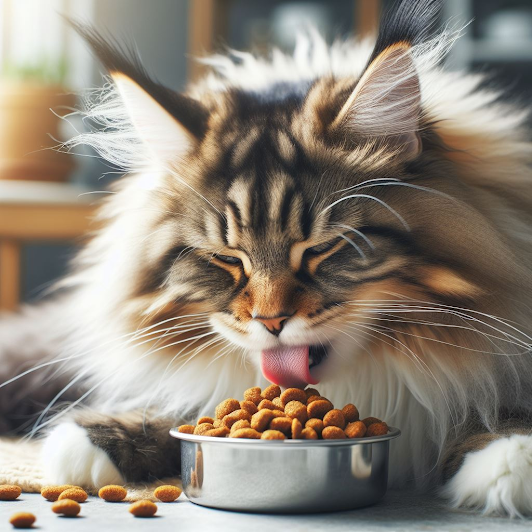
I am speculating here but I like to do that sometimes to see if I can push the boundaries of what we know. But this form of causation or series of events could happen to a Maine Coon cat and the article starts off with a Maine Coon cross suffering from a rare disease called polycythemia aka erythrocytosis, which was reported on the AVMA website in a recent study. Maine Coon eating dry cat food. The label describes a disease in which there is high concentration of red blood cells in the circulatory system. This makes the blood thicker and less able to travel through the blood vessels. The symptoms are linked to the nervous system: ataxia (balance and coordination problems), weakness, seizures, blindness and behaviour change). Although it can be hard to find the underlying cause of polycythemia, dehydration will naturally make the blood thicker. Dehydration according to the the PetMD website leads to an increase of red blood cells (RBC) in proportion to the fluid level of the blood. The ...

Maine Coon cat is predisposed to mast cell skin tumours (MCT)

Image
Neoplasia is the uncontrolled abnormal growth of cells or tissues in the body and can be benign or malignant. It is the fourth most common cause of death in cats according to veterinary records in England, UK. The disease accounts for up to 25% of deaths in the older cat population. This information comes from a study about skin tumours called: "Retrospective study of more than 9000 feline cutaneous tumours in the UK 2006-2013". The word "cutaneous" means affecting the skin. The scientists looked at 219,083 feline samples. 4.4% of the sample had cutaneous tumours. The four most common types of cancerous growths in the skin were basal cell tumours, fibro sarcomas, squamous cell sarcomas and mast cell tumours. Mast cell tumours These are tumours consisting of mast cells. They are very common in dogs. The most common malignant skin tumour and dogs in fact. Mast cell tumours contain granules filled with substances which can be released into the bloodstream and potential...

Some Maine Coons may inherit an increased bleeding tendency

Image
I have been digging around Google Scholar studies as I like to do sometimes! I was looking for some more information about Maine Coon cats and bumped into a study published on August 21, 2020 which investigated an inherited disease which results in an increased tendency to bleed.  The disease is called 'dysfibrinogenaemia' and it causes 'afibrinogenaemic haemorrhage', which had been previously reported in a Maine Coon cat. The scientists in this study concluded that:  "Dysfibrinogenaemia was identified in clinical cases and their healthy relatives, suggesting that this may represent a hereditary condition of Maine Coon cats. Clinicians should be aware of the increased potential for non-haemostasis in this cat breed and consider assessing clotting function before (elective) surgery." My interpretation of that statement is that some Maine Coon cats might inherit this disease which can cause increased bleeding which, in turn, would interest Maine Coon cat breeder...

What can Maine Coon breeders do to minimize inherited diseases?

Image
Maine Coon breeders can take several steps to minimise the incidence of inherited diseases such as hypertrophic cardiomyopathy (HCM), hip dysplasia and spinal muscular atrophy (SMA). In my view, the quality of a Maine Coon cat breeder depends on how energetically they adopt the following strategies which I don't claim is a complete list. As a purchaser of a Maine Coon kitten I'd ask some pertinent questions when meeting the breeder as to how they deal with these aspects of their operation. Genetic testing: the competent and committed Maine Coon breeder will engage in genetic testing. They will in fact prioritise it to identify carriers of specific diseases. They want to know if there foundation cats are free of inherited diseases. If they carry the genetic mutations which create these diseases. And there are DNA tests available for the three diseases mentioned above. These are the major inherited diseases. Breeders will select breeding pairs that are free from these genetic mu...

Maine Coons are popular because purchasers ignore health and are captivated by their appearance

Image
This is a slightly black, depressing article but the idea came to me a moment ago. The reason why the Maine Coon cat breed is in the top three most popular cat breeds in America and perhaps around the world is because the people who buy Maine Coon kittens from breeders are enamoured of the breed's appearance while apparently ignoring an aspect of this breed which is more important namely their health. And their health is not good. You might argue that this breed's health is dire. You might argue that it's shameful that such a handsome cat breed with such a fantastic history has been brought low through irresponsible and unethical breeding. I don't need to remind you about the health of this cat. But I will just touch on a few points. If you want to look into the health of this breed more, I would ask you to use the search facility at the top of the page. Or if you like click on this link because that will take you to the majority the articles about Maine Coon cat healt...

Maine Coons are 12 times more likely to develop "slipped capital femoral epiphysis (SCFE)

Image
A study discovered that Maine Coon cats are 12 times more likely to develop "slipped capital femoral epiphysis (SCFE). So, what is it and is this important? Maine Coon cats are 12 times more likely to develop "slipped capital femoral epiphysis (SCFE). Image: the study referred to (background). The overall image is by MikeB (Canva). It may interest Maine Coon cat owners and those who want to purchase a Maine Coon to know that this cat breed - in addition to inheriting a predisposition to hip dysplasia - also appears to inherit another hip joint condition which, as I understand it, can sometimes lead to hip dysplasia and this other condition is called slipped capital femoral epiphysis . It affects the hip joint. RELATED:  Infographic on hip dysplasia in Maine Coon cats . The study was published in 2016. It is online. You can read it if you wish by clicking on this link . The study was conducted in Austria. The interesting and perhaps disconcerting conclusion of the study, as me...

Negative screening for HCM in Maine Coon kittens does not rule out the disease

Image
In layperson's terms, we know that it's possible to screen Maine Coon breeding cats, foundation cats and the parents of kittens plus the kittens created at cat breeders for hypertrophic cardiomyopathy in order to prevent the creation of Maine Coon cats who are predisposed to hypertrophic cardiomyopathy (HCM) and therefore to reassure purchasers of purebred Maine Coon cats that their purchase will not show signs of the disease quite soon after purchase and have a shortened lifespan as a consequence. By 'screening' I mean testing for a mutant gene that causes the disease. When a Maine Coon breeder says that they screen their cats and kittens for the disease that they sell to clients, should a negative test result totally reassure the client that their purchased kitten will not develop HCM? That is the $64,000 question. The answer to that question is clearly NO , sadly. My research clearly indicates that a Maine Coon cat screened as negative for HCM may still develop this...

Is the Maine Coon kitten healthy (infographic)?

Image
This may help people who are in the process of adopting a Maine Coon kitten. It is an infographic which highlights the basic health factors to assess when buying a kitten. You should really visit the seller's home to assess the kitten before buying. This is going to be ruled out if you buy online and at a distance. You could, however, insist on a contract that states that you have the right to reject the kitten if it does not meet the standards as stated in the infographic although I would expect that to be very rarely demanded. CLICK ON THE IMAGE TO SEE IT LARGER IF YOU LIKE Buying a Maine Coon is about quality; the quality of the kitten, the services provided such as guarantees, the aftercare provided and above all the quality of the parents and the standard of the breeder. All these factors increase the cost of the kitten from under $1000 to something in the order of $5000. A big difference but if you can afford it, I'd go for the quality option as you are guaranteed to adop...

What's it like having a Maine Coon cat as a pet?

Image
If you love cats living with a Maine Coon cat is great. They have an impressive appearance and an attractive personality. Please read on... If you asked a hundred different people living with a Maine Coon cat what it's like you will probably receive a hundred different answers because each of those individual cats will have their own character. And this is the point: Maine Coon cats are like any other domestic cat in many respects.  You could say that 90% of a Maine Coon cat's character is the character of the domestic cat while the remaining 10% will be the character selectively bred into Maine Coon cats by breeders. And the overarching factor is, as mentioned, each individual cat's character. Image copyright Helmi Flick. I'm not going to describe the general domestic cat character because this page really is about the Maine Coons cat character; at least partly because another aspect of living with a Maine Coon cat is their size. A third major aspect is their shaggy co...

Do Maine Coons need special food?

Image
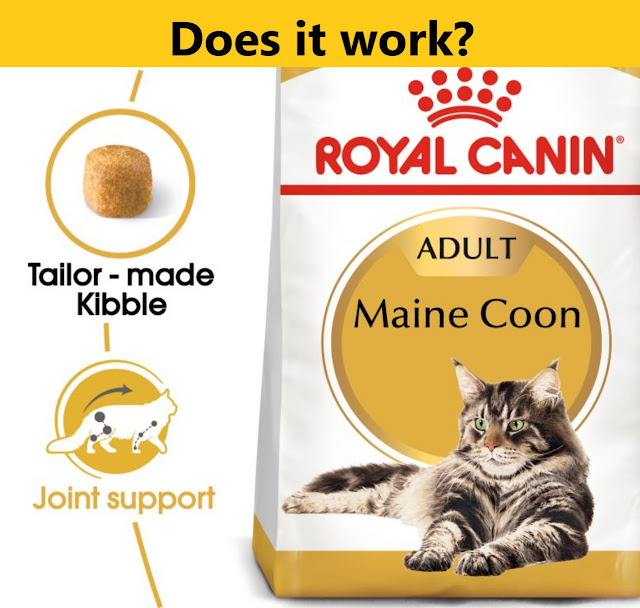
Maine Coons do not NEED special food but there is an argument that they might BENEFIT from a special food such as made by Royal Canin, a large pet food manufacturer based in France, which has jumped on the bandwagon of Maine Coon health concerns which have been thoroughly documented on the internet.  Image: Royal Canin (annotated by MikeB). This is the point: Maine Coons suffer from hip dysplasia - a lose joint between the socket of the hip and the ball of the femur; a joint problem. And patella luxation - a knee cap that moves from its normal capping position. RELATED: What can a Maine Coon owner do to help their cat with hip dysplasia ? To use this inherent weakness in this popular cat breed Royal Canin make a product called "Royal Canin Maine Coon Adult dry cat food" which is "especially formulated for adult Maine Coon cats; King Size kibble encourages longer chewing, with glucosamine and chondroitin for healthy joints". So, there you have it: a special cat food ...

Indicators that a Maine Coon may be predisposed to HCM - hypertrophic cardiomyopathy (heart disease)

Image
Indicators that a Maine Coon may be predisposed to HCM - hypertrophic cardiomyopathy (heart disease). Image by MikeB Scientists looked at some possible indicators that a Maine Coon might be predisposed to developing HCM in their lives. Their conclusion was that the following signs may indicate a predisposition: low birth weight and catch up with rapid growth through good nutrition after poor nutrition as an embryo. obesity. neutered cat, which is linked to 2 above. heavier. long forelimb bones connecting the elbow and shoulder (humerus). Conclusions of the study Below are some extracts from the study. They are technical but they are here for completeness and they may interest some readers. 1. These data support the hypothesis that early growth and nutrition, larger body size and obesity may be environmental modifiers of genetic predisposition to HCM. Further studies are warranted to evaluate the effects of early nutrition and growth on the phenotypic expression of HCM 2. Low birth wei...

Maine Coons appear to be at a higher risk of peritoneopericardial diaphragmatic hernia (PPDH)

Image
A study which has been published online and which you can see by clicking on the following link:  https://doi.org/10.5326/0460398 , concluded that longhaired cats of varying breeds particularly Maine Coon cats appear to be at a higher risk of PPDH.  Maine Coons appear to be at a higher risk of peritoneopericardial diaphragmatic hernia (PPDH). Image: Clinician's Brief. "Peritoneopericardial diaphragmatic hernia" describes the most common congenital defect involving the pericardium in dogs and cats. In this defect, the abdominal contents are herniated (to protrude through an abnormal body opening, rupture) into the pericardial sac (a fibrous sac that encloses the heart and great vessels). For a cat, the symptoms might include: vomiting, diarrhoea, coughing, weight loss and difficulty breathing according to the pet MD website. I think this information may interest some Maine Coon owners who want to do their best for the health of their cat. It is always useful to have a bit ...

Hip dysplasia in Maine Coons is common and it can make them aggressive and harm their character

The presentation of hip dysplasia in Maine Coons is gradual with subtle behavioural changes such as inactivity or aggression, lack of response to human attention, reluctance to go up or down stairs, and resistance to handling. Here is a video I made to change the way I discuss these issues. They are very important issues. It surprises me that people discuss them more or hardly at all. Health is more important than appearance at the end of the day. That's what I think but it seems that I am out of step with almost everyone else!  The video that I have made, boring though it is, is the first I've seen on how hip dysplasia has a negative impact on the cat's character. In the video, I mention that people don't talk about this disease affecting character. What I mean is that the owners on TikTok proudly show off their cats which is understandable but they don't mention this important health issue. They wouldn't because it is a negative but it is important. @mikej...

2 reasons why female Maine Coons are better than males

Image
In human terms it is sexist to select one sex over another and I feel slightly uncomfortable doing it but this article should interest people who are thinking of adopting a Maine Coon cat (MC). 2 reasons why female Maine Coons are better than males. Image: MikeB HCM If you are thinking of adopting you probably know by now that the MC is predisposed to several inherited diseases, one of which is hypertrophic cardiomyopathy (HCM). It is a serious heart disease and ultimately a killer. It can start at a very young age . A breeder says that a cat predisposed to HCM should be tested for the disease yearly. How do you check ? This disease is present in the general domestic cat population and in other breeds at a higher prevalence e.g., the Bengal cat at around 15% of all Bengal cats. It is also present in humans at 0.2% prevalence (1 in 500). However, 30% of Maine coon cats have a genetic mutation that makes it likely that they will develop hypertrophic cardiomyopathy. Cats in general are mo...

Maine Coon cats and arthritis

Image
Maine Coon cats and arthritis. Image: MikeB One website dedicated to the Maine Coon cat tells us that the breed can be affected by the following forms of arthritis based on vet advice: Immune-mediated arthritis  - this is arthritis caused by joint inflammation which in turn has been caused by the cat's immune system going wrong. I will presume that it is an auto-immune disease leading to various symptoms one of which is arthritis. Septic arthritis  - this is arthritis caused by a bacterial infection and the toxins produced by the bacteria which enter the joint cavity via the bloodstream. Osteoarthritis  - this is also known as degenerative joint disease arthritis. Cancerous arthritis  - this apparently is the results of synovial cell sarcomas. These are tumours of the synovial cells in the joint. This is a malignant tumour which can spread to the cat's lungs in 25% of the cases. That looks terribly bad. And it may be painting an overly negative picture of this breed....

Maine Coon broke 2 hips in 2 weeks. The breed is susceptible to Perthes disease.

Image
We know that Maine Coon cats are predisposed through inheritance to develop hip dysplasia. It is a major problem with this breed. However, there is another but slightly different hip disease called Perthes disease. It is also called 'Legg-Calvé-Perthes Disease'. It is a hereditary disease and it affects humans as well. It affects children.  Maine Coon broke his hip twice in 2 weeks. They are susceptible to Perthes disease. This is the cat. Sad. I hope he improves after surgery. Image: Reddit.com. If the blood supply is cut off to the hip joint which describes what happens in Perthes disease, the head of the femur which goes into the socket of the hip degenerates and the bone dies as does the surrounding cartilage. The joint can't function anymore because of the misshapen femoral head and this is, as mentioned, Perthes disease. Like I said, it is very similar to hip dysplasia. As I understand it, they are to different diseases however but the symptoms are going to be similar...

Maine Coon hip dysplasia explained in an infographic

Image
This is a cross-post. I hope that it helps to explain hip dysplasia in Maine Coon cats. The x-rays that we see are not very helpful in terms of understanding the disease. So, I decided to produce a very compact and succinct infographic which I hope people will find useful because a lot of people look at websites on their smartphones. They are looking for speed. As I have said before, it is a great shame that this beautiful cat breed suffers from four serious inherited health problems one of which is hip dysplasia. The diseases don't come about exclusively because of artificial selection i.e. selective breeding but inbreeding is a major contributor to this disease being so prevalent at around a quarter of all Maine Coons. I can think of three others immediately: spinal atrophy, hypertrophic cardiomyopathy and patella luxation. The first concerns the spine gradually atrophying i.e. becoming weaker, the second regards a serious heart disease in which the muscle thickens. It begins wit...

What's the best type of pet health insurance for my Maine Coon?

Image
The pet health insurance market is complicated. It's hard to know what to choose. Having thought about it, the starting point must be the inherited diseases of this popular cat breed which include spinal muscular atrophy, hip dysplasia, patellar luxation and hypertrophic cardiomyopathy. And these diseases can start quite young. And they can be debilitating. Maine Coon pet health insurance discussed. Image: MikeB based in images in the public domain (believed). I wouldn't expect a Maine Coon cat to be involved in many accidents because they will normally be full-time indoor cats and if and when they go outside it will be under supervision. So, the pet health insurance is mainly about managing these inherited health conditions. Some pros and cons of pet health insurance . Four types There are four types of cat health insurance namely accident only, time-limited, maximum benefit and lifetime. Accident I will rule out accident only for the reason stated above.  Time limited "T...

Maine Coon tail thinning reasons

Image
This page tries to focus in on the likely cause of hair loss in a Maine Coon cat's tail as there are a number of potential causes. But you'll have to consider taking your cat to a vet. The good point is that hair loss is not normally an urgent matter which allows for some careful observation to try and diagnose the underlying cause before a possible vet visit. We all know that the Maine Coon tail should be 'plumed' in the words of the cat fancy. The breed standard describes it thus: 'long, wide at base, and tapering. Fur long and flowing'. It is a badge of this popular breed. If it loses it beauty, it's very noticeable and sometimes this happens. What might be the cause? The brilliant Maine Coon plumed tail. Source: Twitter and deemed to be in the public domain. Here is a long list of reasons for hair loss GENERALLY which has been taken from a page that was written for PoC many years ago (and republished more recently). One or two of these are irrelevant in...

Popular posts from this blog

The extreme Maine Coon face

Maine Coon Size - this is a huge one!

No part of a Maine Coon cat should be exaggerated

Comparison of a black smoke Maine Coon at 6 weeks and 6-years-of-age

Eerie picture of a Maine Coon sitting like a human on a chest of drawers

Difference between Maine Coon and domestic long hair

Tortoiseshell Maine Coon with split-face

Black smoke Maine Coon Richie with a black face and diamond eyes

Average lifespan of Maine Coon cat

2 top Russian Maine Coon cat breeders which ship internationally