Posts

Showing posts with the label congenital disease

Hip dysplasia in Maine Coons is not caused by the extra weight of the cat

Image
I have to keep this very brief. Scientists decided that the health problems associated with Maine Coons concerning the hind limbs namely hip dysplasia and patellar luxation are due to inheriting defective genes and not due to the extra weight of this cat breed which I decided years ago is the biggest domestic cat breed. In the words of the scientists: The authors therefore conclude that genetic or other causes may be involved in orthopaedic hind limb pathogenesis seen in MC cats more often than in other breeds. The word 'pathogenesis' means in this case the development and persists of diseases affecting the hind limbs of the Maine Coon. As you see they conclude that inherited genes cause the problem. They also meekly refer to 'or other causes' but there are none that I can think of and which would be plausible. Separately if hip dysplasia affects both legs it it worse. And bigger Maine Coons have worse cases of hip dysplasia. This may be because as the problem develops ...

Demographics of hip dysplasia in the Maine Coon cat

Image
In the world of purebred cats, the Maine completely dominates in suffering from hip dysplasia. No other breed or non-breed comes near in terms of prevalence. The right hip is more likely to be diseased compared to the left. The disease can make Maine Coons aggressive and lose interest in human attention (presumed due to the persistent discomfort) which is sad as this cat is calm and friendly when healthy and well cared for. The disease was first mentioned in 1974. This article sets out information about a large number of Maine Coon cats which suffer from hip dysplasia. I will present the information in bullet form below: There were 2732 individual cat participating in this study of which 99.9% were Maine Coons (2708). The youngest Maine Coon cat with feline hip dysplasia (FHD) was four months of age. The oldest was 60 months of age. Of the 2708 Maine Coon cats with hip dysplasia, 2548 had non-borderline symptoms which meant it was full-blown hip dysplasia. Hip dysplasia was more common...

How long do Maine Coons live?

Image
For me, to be very frank, the question is not that useful because it is encouraging me to generalise, and it is wrong to generalise on lifespan because it will vary between individual cats even when they are all Maine Coons.  Precious Maine Coon life beginning. Will he have a long life free of HCM? Image in public domain (as assessed). But I'm going to try and answer the question nonetheless because a well-known website on Maine Coons answers it and they say that you can expect Maine Coons to live beyond 12 years of age. Like I said, that's not extremely helpful. My assessment that their lifespan is 12 years! Not beyond it. See the update below if you want to cut to the chase. HCM the key It seems to me the discussion about Maine Coon lifespan should centre on a critically important inherited disease that affects this popular breed namely hypertrophic cardiomyopathy (HCM). A lot has been written about this heart disease. How does it affect lifespan? It must affect lifespan to ...

How do I know if my Maine Coon has hip dysplasia (HD)?

Image
We know that hip dysplasia (HD) is pretty common in Maine Coon cats, regrettably . It should be something that Maine Coon cat owners are fully aware of, and I am sure that most of them are. I think that it should worry people who want to adopt a Maine Coon cat. It means that you are adopting a cat that is liable to end up disabled requiring special treatment and perhaps veterinary care. Anyway, that is another topic.  Although the breeders should do more about this as a matter urgency, but it appears to be accepted by the cat fancy which if true is remiss of them. Breeders would normally take steps such as eliminating cats with HD from the breeding programme but clearly this is not happening enough. Perhaps pet health insurance is appropriate , but the problem will be the high premiums because this is a known congenital condition.  Remember, too, that hip dysplasia is more common and worse in larger Maine Coons . It is a trade-off for the impressive stature of these huge cats....

How prevalent is slipped capital femoral epiphysis (SCFE) in Maine Coon cats?

Image
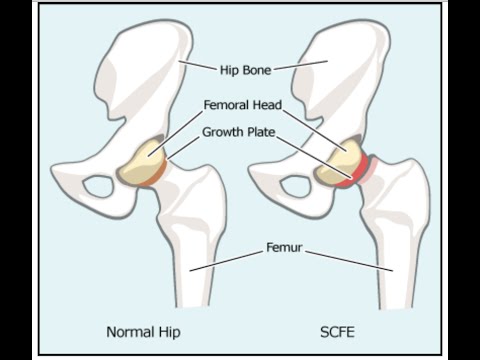
There is a strange, unique it seems to me, study about what I believe to be a very rare condition in cats namely "slipped capital femoral epiphysis" (SCFE). I did some research on it to figure out what it means. And my interpretation of what that difficult to understand medical and scientific language means is that the top of the femur (thigh bone) which is a ball-shaped section of the bone 'slips' in relation to the remainder of the bone as you can see in the picture. In more technical language it is a fracture through the growth plate which results in movement of the end of the femur. It seems that surgery is the fix as it holds that cap at the end of the femur in place and in alignment with the rest of the bone. SCFE on humans. Image: YouTube. The study which took place at the Institute of Pathology and Forensic Veterinary Medicine, Department for Pathobiology, University of Veterinary Medicine Vienna, Vienna, Austria, concluded that SCFE had only been reported occ...

Popular posts from this blog

The extreme Maine Coon face

Maine Coon Size - this is a huge one!

Comparison of a black smoke Maine Coon at 6 weeks and 6-years-of-age

Average lifespan of Maine Coon cat

Eerie picture of a Maine Coon sitting like a human on a chest of drawers

Tortoiseshell Maine Coon with split-face

Are Maine Coons illegal in some countries, states or territories?

Difference between Maine Coon and domestic long hair

No part of a Maine Coon cat should be exaggerated

2 top Russian Maine Coon cat breeders which ship internationally