Posts

Showing posts with the label science

Hyped up story of a 'Maine Coon' who 'pants like a dog' at playtime

Image
A Maine coon kitten has gone viral on social media after her owners caught her unusual playtime behaviour on camera. Well, this whole story is a fabrication really.  Sorry to be a killjoy but I like reality. The internet has run out of ideas so it makes up stories. Normal. The news media describes this cat as a Maine Coon and, frankly, I don't see that this cat is a Maine Coon cat judging by its appearance. The appearance of this cat is of a standard calico cat. If the cat is a Maine Coon cat it is non-standard and would not pass the breed standard in my view. Secondly, although slightly unusual, it is not very rare for cats to pant like dogs. It happens all the time but often we don't notice it. Perhaps it is the comparison between cats and dogs which makes a cat panting look unusual and rather strange but in truth it is not. MORE: Cat panting - click for more on this . And lastly, the video hasn't gone viral. It's attracted some attention but nothing special because i...


Ramipril an ACE inhibitor does not benefit Maine Coons with HCM without congestive heart failure

Image
Maine Coon photo copyright Helmi Flick. This is very much a 'normal' Maine Coon not bred to extreme. Introduction I am not a veterinarian I am good at research I am good at understanding medical/scientific studies I can summarise them into plain English --------------------- Ramipril is an ACE inhibitor. ACE stands for "Angiotensin-converting enzyme". ACE inhibitors such as Ramipril are medications that help relax the veins and arteries to lower blood pressure.  Key point: ACE inhibitors prevent an enzyme in the body from producing angiotensin II, a substance that narrows blood vessels.  Alternative names for Ramipril include: Lopace, Ramipril, Triapin, Triapin Mite, Tritace (British Heart Foundation). The study I am referring to is: The Effect of Ramipril on Left Ventricular Mass, Myocardial Fibrosis, Diastolic Function, and Plasma Neurohormones in Maine Coon Cats with Familial Hypertrophic Cardiomyopathy without Heart Failure. Link to study abstract:  https://doi.o...

Demographics of hip dysplasia in the Maine Coon cat

Image
In the world of purebred cats, the Maine completely dominates in suffering from hip dysplasia. No other breed or non-breed comes near in terms of prevalence. The right hip is more likely to be diseased compared to the left. The disease can make Maine Coons aggressive and lose interest in human attention (presumed due to the persistent discomfort) which is sad as this cat is calm and friendly when healthy and well cared for. The disease was first mentioned in 1974. This article sets out information about a large number of Maine Coon cats which suffer from hip dysplasia. I will present the information in bullet form below: There were 2732 individual cat participating in this study of which 99.9% were Maine Coons (2708). The youngest Maine Coon cat with feline hip dysplasia (FHD) was four months of age. The oldest was 60 months of age. Of the 2708 Maine Coon cats with hip dysplasia, 2548 had non-borderline symptoms which meant it was full-blown hip dysplasia. Hip dysplasia was more common...

Scientists created Maine Coons with diseased hearts in the interests of human health

Image
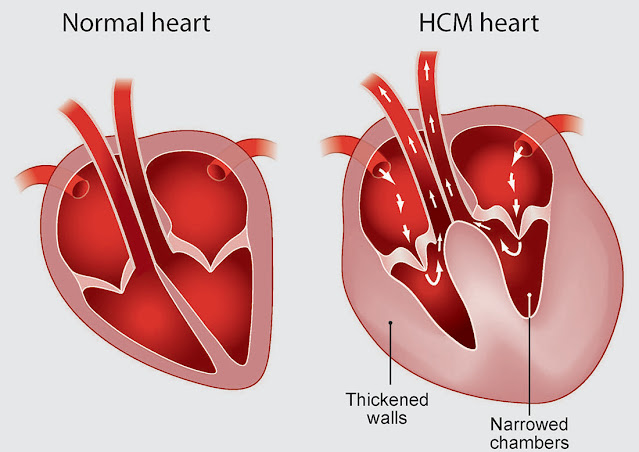
This was a scientific abuse of the Maine Coon in using the cat as an animal 'model' of HCM. A study confirmed that hypertrophic cardiomyopathy (HCM) in Maine Coon cats is inherited as a non-sex linked dominant genetic mutation. The study found that HCM was inherited with 100% penetrance, meaning that all cats with the genetic mutation that causes HCM will develop the disease.  Image: PDSA. Thank you. Affected cats typically did not show signs of HCM until they were at least 6 months old, and the disease progressed during adolescence and young adulthood.  Mode of inheritence Of 22 offspring from breeding affected to un affected cats, 12 (55%) were affected. When affected cats were bred to affected cats, 4 (45%) of the 9 were affected, 2 (22%) unaffected, and 3 (33%) stillborn. To restate the first sentence of the above para. If a breeder mates a Maine Coon which carries the genetic mutation causing HCM with a Maine Coon that does not carry the gene, around half the kittens fr...

Some behavioural traits of the Maine Coon according to a large-scale Finnish study

Image
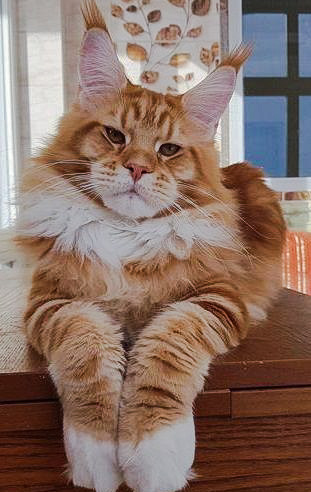
I think that it is always useful to go to science to examine the behavioural traits of any single cat breed. In this instance, a Finnish study titled: 'Breed differences of heritable behavioural traits in cats', looked at 5,726 individual cats through a questionnaire given to their owners.  Ginger tabby and white Maine Coon chilling. Image in public domain. Maine Coons participated in study as did other breeds and non-purebred cats. They were looking at whether selective breeding of Maine Coon cats and other breeds controlled to a certain extent the cat's character. And they found some correlations between genetic inheritance and behaviour. I have always said that in any chosen breed you can't say that all the individual cats are going to have the same character. That is impossible and it doesn't make sense. That's because there are two influencing factors: inherited character and environmentally altered character through experiences. Also, there are many breede...

Paintings of the Maine Coon created entirely by an artificial intelligence (AI) computer

Image
You may find these images surprising knowing that they were created entirely by a computer without any input other than asking the computer (in the first image) to create a 'realistic painting of a Maine Coon cat'. I think the computer did a very good job. It created the image in about 10 seconds with three others! All of them different. Painting of a Maine Coon entirely by an artificial intelligence (AI) computer.  Below is another painting by the same computer. I instructed it to create a painting of a Maine Coon cat in the Picasso style. I don't think this is quite as good because I do not think that the painting is in fact in the Picasso style 😉. I was looking for one of those classic Picasso paintings where the eyes and ears and mouth are all out of position with strong angular lines and black outlines. I have got something which is more like an impressionistic painting. Still good though. Painting of a Maine Coon entirely by an artificial intelligence (AI) computer i...

Round up of the genetic mutations causing HCM in Maine Coons

Image
I have decided to do what I would call a 'round up' of the mutated genes behind the disastrous inherited heart disease of hypertrophic cardiomyopathy (HCM) in this very popular domestic cat breed which is in top three most popular breeds on some polls .  Mutated genes cause HCM in Maine Coons, but the problem is fixable by removing studs and queens with the mutation from breeding lines. Why isn't this happening? Image: MikeB By 'round up' I mean pulling together the strands of information that I have discovered about the causes of this disease from research conducted over many years. I have endeavoured to use plain English at all times as this is a very technical topic. A round up is needed because different research projects have come to apparently different findings, but they are overlapping as in all cases the genetic mutation responsible has a negative impact on the creation of heart muscle such that HCM is programmed to occur at some stage in the affected cat...

Blood clotting disorder in Maine Coon cats?

Image
Definitions: Dysfibrinogenaemia - this is a blood clotting disorder because of an abnormal form of fibrinogen in the blood which is a protein produced by the liver which helps control bleeding by helping blood clots to form. Afibrinogenemia - this is an inherited fibrinogen abnormality causing a rare bleeding disorder. Haemostasis (hemostatis) - this describes a mechanism which leads to the stopping of bleeding from a blood vessel. Hereditable (heritable) - this means capable of being inherited. Coagulopathy - a disorder causing either excessive bleeding or clotting. An investigation carried out in 2020 and published on August 21, 2020, found that dysfibrinogenaemia may be a hereditary condition in Maine Coon cats. They were investigating a report of afibrinogenaemic haemorrhage in a Maine Coon cat. Two littermates subsequently died from surgical non-haemostasis (not stopping bleeding) which suggested to the researchers that this was hereditable coagulopathy. They concluded that "...

Study says that Maine Coons have a high susceptibility for gastrointestinal intussusception

Image
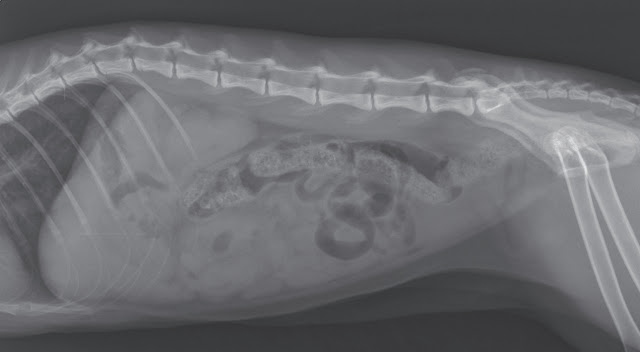
A study dated April 14, 2014 (quite a long time ago) which took place in Germany, concluded that "Maine Coons have a high susceptibility for gastrointestinal intussusception." Gastrointestinal intussusception in Maine Coons. Image: study. The study: Gastrointestinal intussusception in the Maine Coon: A review of 19 case. By J. VERSCHOOF, C. THIEL, M. HENRICH and M. KRAMER. They couldn't find any "predisposing factors" which might be behind this susceptibility. They recommended further research. So, what is gastrointestinal intussusception? It describes a condition when the bowel i.e. the intestines, telescopes in on itself. The outside wall of one section of the intestines become adjacent to and facing the inside wall of the intestines nearby. The most common sign of intussusception in cats is vomiting or diarrhoea which lasts for more than two days. And it can be accompanied by blood in the stools or vomit. There is a loss of appetite and signs of depression. P...

Maine Coons developed severe facial ulcerative dermatitis when used as test subjects for a human acne drug

Image
I will have to keep this brief because I am working off an abstract of a study which is a summary. I've seen similar studies where scientists have used Maine Coon cats to test drugs that are used on people suffering from hypertrophic cardiomyopathy (HCM). I guess the scientist wanted to see whether these human drugs work on cats and Maine Coons are predisposed to developing HCM. Maine Coons developed severe facial ulcerative dermatitis when used as test subjects for a human HCM drug. Image in public domain. On this occasion they tested a drug called Spironolactone (SPIR) in America. As mentioned, they tested it on Maine Coon cats with familial HCM i.e. inherited HCM. They wanted to see whether this drug improved diastolic function and reduced left ventricular mass in these cats. The conclusion is that it did not work. They tested the drug over four months. For me, a disturbing statement in their summary is this: one third of cats treated with SPIR developed severe ulcerative facial...

Maine Coon is middle-ranking in terms of developing Type 2 diabetes in purebred cats

Image
The table on this page in my view ranks purebred cats in terms of their prevalence to developing diabetes mellitus. The scientists have compared the incident rate to the number of cat years at risk which I find a bit strange but they did look at a cohort of 504,688 individual cats insured in Sweden. So, the data comes from insured Swedish purebred and non-purebred cats and claims made on behalf of those cats by their owners over a total of 1,229,699 cat-years at risk. So, based upon these insurance claims they concluded that the Maine Coon cat is middle-ranking which I take to mean that this extremely popular cat breed is neither predisposed more or less than the average purebred cat. The table also tells us that Maine Coon cats are less predisposed to Type II diabetes (another way of describing diabetes mellitus) then standard random-bred cats. This I think is a good thing. RELATED:  Can feline diabetes be reversed ? As an aside, the breeds: Burmese, Russian blue, Norwegian For...

Genetic mutation causing HCM in American Maine Coon cats not present in European cat population

Image
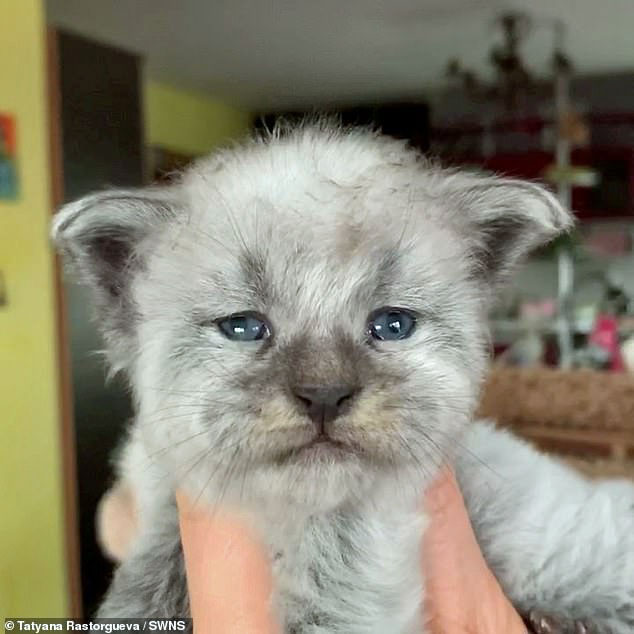
Scientists screened 3757 cats from different cat breeds in America including 2744 Maine Coon cats for a genetic mutation called MYBPC3-A31P, which the scientists say has been identified in the USA in a colony of Maine Coon cats suffering from autosomal dominant hypertrophic cardiomyopathy (HCM). I'm not sure whether this is THE genetic mutation which causes HCM and Maine Coon cats. It probably isn't. The genetic mutations causing HCM in domestic cat is a complex subject. But let's say that this is at least one genetic mutation which alters the creation of muscle fibres in the heart causing the heart wall to thicken leading to this inherited health problem. Young Maine Coon with human face. How healthy is she/he? Photo as per bottom-left on image. Note: I am not suggesting that this cat has HCM or has been poorly bred. The results of the study pointed to the fact that this mutation is only found in Maine Coon cats with a prevalence of 41.5%. They found one exception which...

Scientists artificially created a family of Maine Coon cats suffering from HCM (hypertrophic cardiomyopathy)

Image
In 1999, a group of scientists decided to take one Maine Coon cat suffering from familial hypertrophic cardiomyopathy (FHCM) and from that "proband" (an individual serving as the starting point for a genetic study of a family) they created a colony or family of HCM sufferers by mating the proband with related cats.  Image: Pixabay. To be clear, the scientists created an inbred family of Maine Coons who all suffered from HCM. The purpose? To determine the mode of inheritance, phenotypic expression and natural history of HCM to better understand the disease in humans. To a cat advocate, this is an abuse of domestic cats and unusually a very popular purebred cat, the Maine Coon. They concluded that HCM in this family of Maine Coons that they had created resembled the human form of familial hypertrophic cardiomyopathy. As a consequence, the research should prove to be "a valuable tool for studying the gross, cellular, and molecular pathophysiology of the disease". Th...

Hip dysplasia in Maine Coons is more severe when it affects both hips

Image
 Maine Coon hip dysplasia is more severe when it affects both hips. I have no knowledge about the health of this stupendous cat. The picture is here to illustrate the page only. Photo: in public domain. This has to be short because I am reading off the summary to a study called Demographics of Hip Dysplasia in the Maine Coon cat . The Researchers had access to the complete hip dysplasia registry collected by the Orthopaedic Foundation for Animals through April 2015. The registry contained information on 2,732 cats of which 99.1% were Maine coon cats i.e. 2,708. They found that hip dysplasia is more severe in bilateral than in unilateral cases. This means when both hips are affected the severity of the disease is worse. They also found that the disease becomes more severe with increasing age. Finally, the overall incidence as per this registry was 24.9% of Maine Coon cats. To put that another way, 24.9% of Maine Coons had hip dysplasia in this registry. The number was slightly hi...

Maine Coons with HCM more likely to be older, neutered, heavier, more obese and have longer humeri bones

Image
Compared with Maine Coon cats without HCM, Maine Coon cats with echocardiographic evidence of HCM were found to be older, more likely to be neutered, heavier and more obese and had longer humeri. These are the findings of a study which I found interesting. I'm going to try and pick out the interesting bits and write about them in layperson's terms. If you're interested you can read the study yourself by clicking on this link . MC of 2 halves. She has a facial blaze (sharp demarcation). Photo: Pinterest. What the scientist did was do compare Maine Coons with HCM and those without HCM. We know that this is an inherited condition in Maine coon cats. But it seems to me that they were looking at other factors which they describe as "environmental modifiers of genetic predisposition to HCM". In other words Maine coon cats inherit HCM but are there any other environmental factors with influences how HCM progresses in Maine coon cats? This is my interpretation. For the...

Orthopaedic hind limb disease in Maine Coon cats not caused (or exacerbated?) by size or gait

Image
We know that the Maine Coon (MC) suffers from a high incidence of orthopaedic diseases of the hind limb (hip dysplasia, patellar luxation). Thirty-seven percent of MCs suffer from feline hip dysplasia (FHD) . The question posed by a group of scientists was whether this had something to do with the size of the breed and/or their gait (the way they walked). MCs have a longer stride length and paw contact area than standard domestic cats. Plus they are nearly always heavier. Heavy-set MC. Photo in public domain. They compared ground reaction force measurements in a population of domestic shorthair and Maine Coon cats. All the MCs evaluated were not lame. They evaluated parameters such as peak vertical force (PFz), vertical impulse (IFz), time to PFz (TPFz), step length (SL), paw contact area (PCA), stance phase duration (SPD) and symmetry index (SI) for the fore- and hind limbs. Complicated and precise stuff. Although the vertical force and vertical impulse were higher in MCs than for ...

Popular posts from this blog

The extreme Maine Coon face

Maine Coon Size - this is a huge one!

Comparison of a black smoke Maine Coon at 6 weeks and 6-years-of-age

Average lifespan of Maine Coon cat

Eerie picture of a Maine Coon sitting like a human on a chest of drawers

Tortoiseshell Maine Coon with split-face

Are Maine Coons illegal in some countries, states or territories?

Difference between Maine Coon and domestic long hair

No part of a Maine Coon cat should be exaggerated

2 top Russian Maine Coon cat breeders which ship internationally