Posts

Showing posts with the label congenital condition

Bilateral slipped capital femoral epiphysis in a female Maine Coon is rare

Image
Lexie. Picture: Express. I've written about slipped capital femoral epiphysis before and about its prevalence in the Maine Coon cat breed and you can read those articles by clicking on links below if you wish. Interestingly I bumped into a recent article online on the Express newspaper online in which a veterinarian accepted a female Maine Coon cat patient with bilateral slipped capital femoral epiphysis and he said that it was the first time he had seen a female patient with that disease affecting both hind limbs in 30 years of being a veterinarian. Obviously it's a very rare condition when it's bilateral and it concerns the female Maine Coon. Maine Coons are 12 times more likely to develop "slipped capital femoral epiphysis (SCFE) How prevalent is slipped capital femoral epiphysis (SCFE) in Maine Coon cats ? The owner was unaware of what the health problem might have been. As it happens, the cat's owner and the cats became part of a Channel 4 television programme...

How long do Maine Coons live?

Image
For me, to be very frank, the question is not that useful because it is encouraging me to generalise, and it is wrong to generalise on lifespan because it will vary between individual cats even when they are all Maine Coons.  Precious Maine Coon life beginning. Will he have a long life free of HCM? Image in public domain (as assessed). But I'm going to try and answer the question nonetheless because a well-known website on Maine Coons answers it and they say that you can expect Maine Coons to live beyond 12 years of age. Like I said, that's not extremely helpful. My assessment that their lifespan is 12 years! Not beyond it. See the update below if you want to cut to the chase. HCM the key It seems to me the discussion about Maine Coon lifespan should centre on a critically important inherited disease that affects this popular breed namely hypertrophic cardiomyopathy (HCM). A lot has been written about this heart disease. How does it affect lifespan? It must affect lifespan to ...

Congenital hernia of the diaphragm overrepresented in Maine Coon cats

Image
The full inherited condition i.e. congenital condition is called 'peritoneopericardial diaphragmatic hernia (PPDH)' and in a study published on National Centre for Biotechnology Information website, it is described as being overrepresented in long-haired cat breeds including Maine Coons, Persians, Himalayans and longhaired random-bread cats.  I don't know how prevalent this condition is in Maine Coons. It might be very rare. And probably is. What are the symptoms?  According to petmd.com they include irregular heartbeat, labored breathing. The abdomen may move rapidly (palpitate) or feel empty. Reactions such as vomiting, diarrhea, and bloating can occur because of damage to the bowel or stomach. This is the first time I have heard about this. We know of the other inherited conditions in Maine Coons such as hip dysplasia and patella luxation together with hypertrophic cardiomyopathy (HCM) but this is a new one to my knowledge. The study on this was published in 2018. They ...

How prevalent is slipped capital femoral epiphysis (SCFE) in Maine Coon cats?

Image
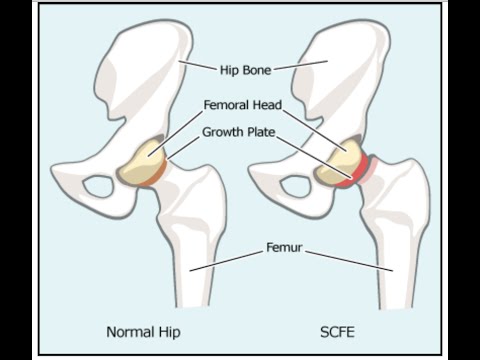
There is a strange, unique it seems to me, study about what I believe to be a very rare condition in cats namely "slipped capital femoral epiphysis" (SCFE). I did some research on it to figure out what it means. And my interpretation of what that difficult to understand medical and scientific language means is that the top of the femur (thigh bone) which is a ball-shaped section of the bone 'slips' in relation to the remainder of the bone as you can see in the picture. In more technical language it is a fracture through the growth plate which results in movement of the end of the femur. It seems that surgery is the fix as it holds that cap at the end of the femur in place and in alignment with the rest of the bone. SCFE on humans. Image: YouTube. The study which took place at the Institute of Pathology and Forensic Veterinary Medicine, Department for Pathobiology, University of Veterinary Medicine Vienna, Vienna, Austria, concluded that SCFE had only been reported occ...

Polydactyl Maine Coon youngster with unruly whiskers

Image
I see a mass of whiskers and toes on this cute Maine Coon youngster bred by Albireo Yuliasha. I don't know where she lives. It might be Ukraine. I like the cat. It is nice to see a polydactyl Maine Coon. They are famous for this multi-toed congenital condition which is harmless. It is not an illness. I have a page the world record polydactyl cats - those with the most toes which you can see by clicking on this link . Polydactyl Maine Coon youngster with unruly whiskers. Photo and breeder: Albireo Yuliasha. Hemingway's House on Key West is the most famous place for polydactyl Maine Coons. But I think a lot are not Maine Coons. In fact, I don't think any are today but there may have been some years ago. Perhaps they were never Maine Coons but referred to as cats of this breed. 

Popular posts from this blog

The extreme Maine Coon face

Maine Coon Size - this is a huge one!

Average lifespan of Maine Coon cat

Comparison of a black smoke Maine Coon at 6 weeks and 6-years-of-age

Are Maine Coons illegal in some countries, states or territories?

5 Maine Coon transformations from kitten to adult (video)

Tortoiseshell Maine Coon with split-face

Eerie picture of a Maine Coon sitting like a human on a chest of drawers

A mightily beautiful orange Maine Coon

Today's Maine Coons are much larger and longer than the original